How Bend matches its paywalls to user intent
Bend does not rely on one paywall or present every user with the same offer. Its subscription journey changes as users experience more value and demonstrate stronger intent.
This independent analysis breaks down how the strategy works and why it creates multiple opportunities to convert without blocking the user too early.
by Gloria Ooi
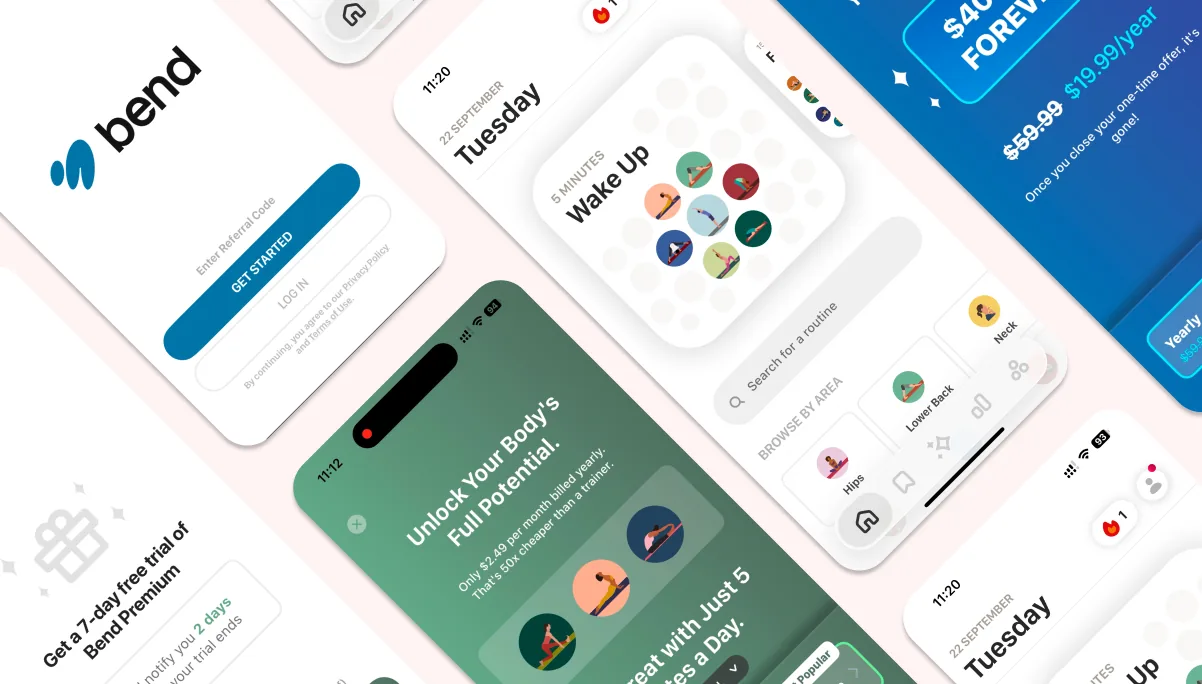
Five moments, each responding to different user behaviour
The offer, message and restriction change as the user moves from completing onboarding to actively asking for more.
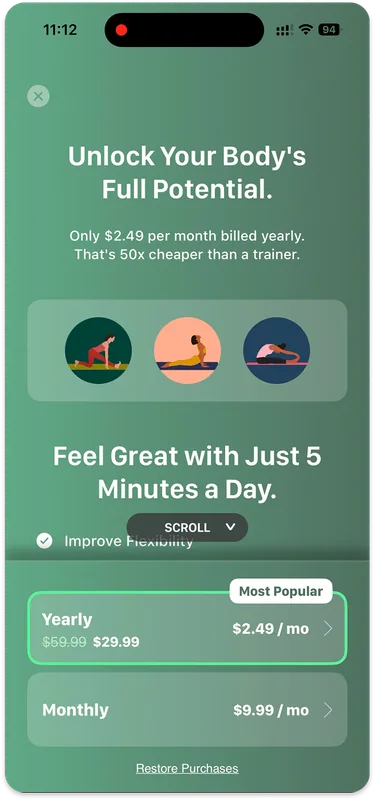
Onboarding completed
Bend presents a dismissible subscription offer immediately after onboarding. There is no free trial, but users can continue without subscribing.

The initial offer is dismissed
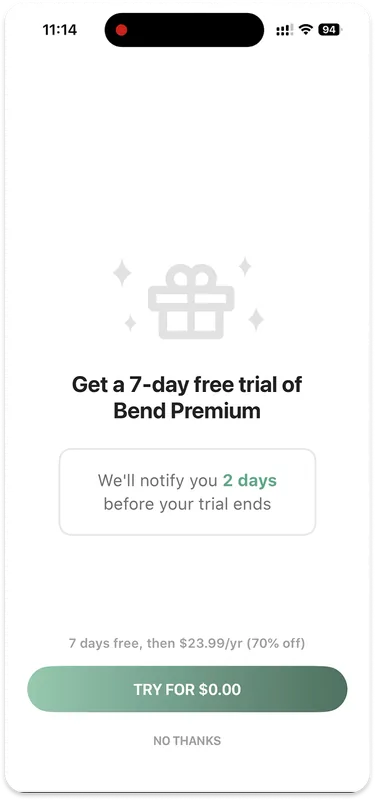
After the user dismisses the first paywall, Bend introduces a different offer framed as a gift, with 50% off the subscription.
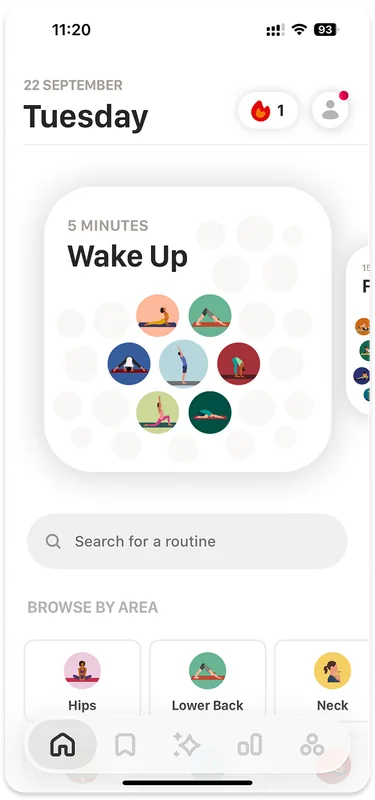
The user experiences the product
Users who still do not subscribe can enter the app and complete their first stretching routine. This gives them an opportunity to experience the core product before facing a stronger restriction.
A new offer appears after the first stretch
After the first exercise, Bend presents another subscription offer. This time, the message connects Premium with achieving the user's goals and introduces a seven-day free trial.
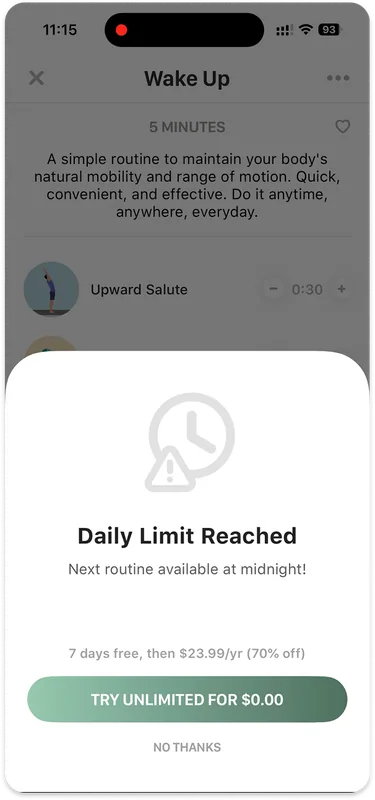
The user actively asks for more
When the user attempts another exercise, Bend introduces its strongest restriction. The user can upgrade to Premium or wait until midnight for the free exercise to reset.
Each subscription moment has a different job
Taken together, the five moments suggest a deliberate progression rather than a series of repeated paywalls.
Value before restriction
Users can experience the core product before encountering the hardest limit, giving the subscription decision more context.
Offers match the moment
Bend changes the framing, discount and trial depending on where the user is in the journey instead of repeatedly showing the same offer.
Behaviour reveals intent
Attempting a second exercise is a stronger signal than simply completing onboarding. The user's behaviour indicates that they want continued access.
The commercial questions I would investigate
The journey follows a clear behavioural logic. With access to Bend’s internal data, I would investigate how each paywall contributes to conversion, trial quality and overall revenue per new user.
How many additional purchasers are recovered after users decline the first offer?
Does showing a 50% discount immediately after dismissal reduce full-price purchases or overall revenue per new user?
Do users who start a trial after completing their first exercise convert to paid at a higher rate?
How does purchase conversion differ across the onboarding, post-workout and second-exercise paywalls?
Does the complete journey increase net revenue per new user after accounting for discounts, trial conversion and early cancellations?
A declined paywall does not mean the journey is over. It creates an opportunity to learn from the user’s behaviour, allow them to experience more value and surface a different subscription decision when their intent becomes stronger.
View the original LinkedIn post ↗
What is your subscription journey learning from user intent?
I help subscription app teams identify where users hesitate, develop testable improvements and measure whether those changes create commercial value.